ICHOM

  • About
    • The ICHOM Mission
    • Board and Team
    • How We Help You
  • Outcomes Research
    • Sets of Patient-Centered Outcome Measures
    • IT-Ready Sets
    • About ICHOM Sets
    • Implementation Guidance (Implementation Directory & Map)
    • Learning Collaboratives
  • Education & Events
    • ICHOM Education
    • Webinars & Courses
    • Conferences & Events
  • Accreditation
    • Accreditation Program
    • ICHOM x Statista
    • Accreditation Program FAQs
  • Partnerships
    • Partner Program
    • ICHOM Implementation Partners
    • Patient Partner Alliance (PPA)
    • PPA Members
  • Shared Learning
    • Resources
    • Case Studies
    • News
  • Contact
  • Donate
  • Home
  • News
  • News
  • Implementation Partner The Clinician

Implementation Partner The Clinician

Thursday, 30 November 2023 / Published in News

Every month we have focus on one of our Implementation Partners; this program was set up to support providers in establishing ICHOM Sets within daily clinical practice, and our network offers support in technical, change management, costing and resource planning.

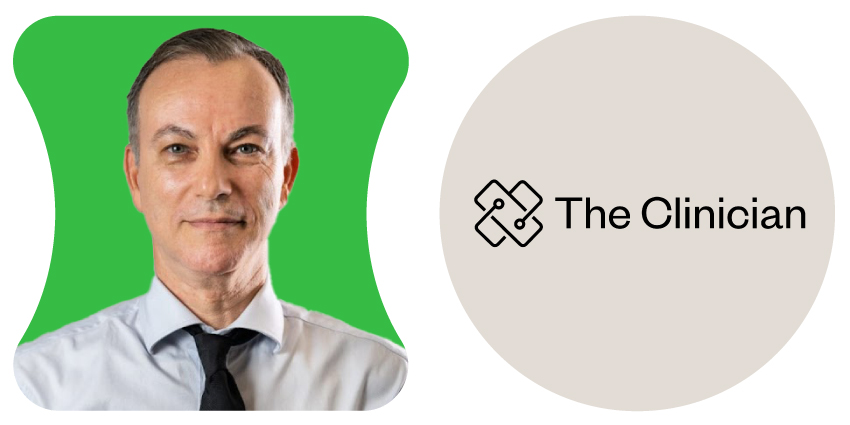
This month we are interviewing our implementation partners The Clinician. We are excited to hear from Dr Ron Tenenbaum, Chief Executive Officer.


Q: Can you give us a brief introduction to The Clinician, and what you do? 

We are a global healthcare company supporting providers, payers and health systems in value-based healthcare implementation through the digitisation of patient care journeys and systematic collection and utilisation of patient-reported measures (PROMs and PREMs).

Founded by clinicians, our mission is to pioneer a new era in healthcare where patients, providers and payers work together to improve healthcare delivery, by measuring and utilising the outcomes that matter most to patients.

Working in partnership with healthcare organisations internationally, we bring together domain expertise in value-based care implementation with a cutting edge healthcare platform that improves the accuracy and completeness of patient-centred health data collected while powering clinical decision-making at all levels of the health system.


Q: What is The Clinician’s  expertise in helping clients with Value-Based Care?

Our core focus to date has been supporting organisations to systematically collect, analyse and utilise patient-centred outcomes data to improve care delivery at the micro (patient-provider), meso (organisational) and macro (policy, population health and payments) level.

The specific expertise we provide depends on where an organisation sits within that journey but it spans from the initial design phase (mapping the patient journey and what measures/standards to adopt, defining data flows and governance, creating meaningful data visualisations, etc.) right through to digital implementation where we configure and deploy our health platform to automate patient outreach, collection, analysis and visualisation of real-time patient-centred health data (PROMs, PREMs, CROMs, etc.).

Our expertise has come through in a number of impactful collaborations with healthcare organisations across more than 8 countries, all of which are centred around a shared long-term commitment to value-based care and improving the outcomes of patients.


Q: What do you see as the biggest challenges – and opportunities – in expanding the network of healthcare providers using VBHC models?

Over the past few years, we have seen a momentum shift in awareness and adoption of VBHC models, with an increasing number of healthcare providers and payers moving from thought to action.

With health systems and organisations today establishing dedicated value-based care teams and initiatives, mandating collection of patient-reported measures (PROMs and PREMs) and extending the definition of quality to include those outcomes that matter most to patients, the core challenges concerning strategic focus, resourcing and budget are slowly being replaced by challenges related to change management, clinical buy-in and implementation.

As our healthcare partners move from thought to action, some of the key challenges we are observing today include:

  • Optimising data collection: systematically collecting accurate and complete patient-centred outcomes data (with patient response rates above 70-80%) in an efficient manner is a common challenge we see organisations looking to solve in their transition to VBHC models.


  • Clinical buy-in: while top-down adoption of VBHC is essential, a lack of clinical buy-in from the bottom-up, due to poor communication and a lack of clinical involvement in the design phase, is a barrier to success.


  • Interoperability of data: VBHC models require data to flow from and between different systems, requiring collaboration between stakeholders to overcome the human and technology challenges related to interoperability.


  • Data utilisation: a common challenge we see with our partners is a lack of understanding on how to use the patient-centred data being collected, both at an individual patient level and an aggregated population level.

From our perspective, each of these challenges also presents an exciting opportunity for expanding the network of healthcare providers using VBHC models.

Naturally, the growing number of providers collecting high quality outcomes data opens up the potential for learning within and across organisations. We are entering an exciting new phase where healthcare providers and payers will be able to deliver more personalised care to patients based on real-time outcomes data while analysing population-level data of different patient cohorts to design and implement targeted quality improvement initiatives. Federated learning will enable organisations to more easily and securely share data across firewalls and geographies while policymakers at the macro level will have more information from which to accelerate the shift away from fee-for-service models towards value-based payment contracts.

As such, there is a lot to be optimistic about and we are pleased to be helping play a central role in addressing the key challenges that organisations face today in the adoption of VBHC models.


Q: What message do you have for our different audiences (e.g., providers, regulators, payers, patient organizations etc.) about how they can support the transformation to an outcomes-based healthcare system?

To providers, co-design your VBHC initiatives with clinicians and consumers and look at where you can leverage existing work and/or motivated clinical champions to achieve quick wins that support adoption. Seek support from those who have gone through the process before and where possible, apply learnings from other change management initiatives that your organisation has gone through.

To regulators, continue being a catalyst for change and working with stakeholders from across the sector to support policy that advances the collection, analysis and utilisation of patient-centred quality measures, while safeguarding the privacy and confidentiality of patient healthcare information.

To payers, invest in value and be bold in developing models that incentivise improvement in quality based on what matters most to patients. By becoming more proactive partners in the healthcare journeys of your patients and adopting innovative approaches to healthcare delivery underpinned by patient-centred outcomes, we can create a system that improves outcomes and the bottom line.

To patient organizations and patients themselves, you have a critical role to play in shaping the design and delivery of value-based healthcare models. Make your voice heard, be an active participant in decision-making at every level, and advocate for transparent quality measures that allow you to make informed, shared decisions with healthcare professionals.

Finally, to technology and service companies with the same vision as ours, continue innovating for impact and developing solutions that meet the real-world needs of providers, payers and health systems globally. Be long-term and trusted partners in that journey and keep your focus firmly on the needs and experiences of the end-users.

VBHC transformation requires a collective effort, with each of us playing a unique yet connected role in the development of sustainable health systems that deliver better health outcomes for individuals and communities.


Q: Can you share any examples where you’ve helped clients successfully adopt VBHC models?

We have a number of impactful collaborations with healthcare organisations to support the adoption of VBHC models. One recent example is our partnership with Northern Health, a major healthcare services provider in Victoria, Australia.

Working with the Director of Respiratory Medicine, Dr. Katharine See, and the Lung Mass Clinic team at Northern Health, we developed and deployed a digital care pathway automating the collection and analysis of patient-reported outcome measures (PROMs).

The digital pathway configured within our platform was developed in co-design with clinicians and consumers, based on the ICHOM Set for lung cancer. Importantly, the digital pathway was integrated with the existing patient administration system and outpatient medical record to minimise the burden for clinician participation and support utilisation of PROMs data during consultations with patients.

The Lung Mass Clinic team has seen numerous benefits from the program to date, with clinicians using the real-time PROMs data during consultations with patients to facilitate more holistic and personalised care delivery, while each quarter PROMs data is reviewed in the lung tumour stream quality and safety meeting to identify gaps in care and facilitate improvement initiatives.

The results speak for themselves with 90% patient response rates, 90% clinician satisfaction and an average improvement in patient activation of 6 points. In summarising the benefits of the pathway and the importance of the data being systematically collected, Dr. Katharine See said: “…the information that you get is so powerful, I think it’s completely practise changing”


Q: How do you think the healthcare part of your business will look ten years from now – and what role will VBHC models play within it?

Firstly, healthcare organisations will move beyond data collection and analysis to utilisation, embracing predictive and proactive models of care based on multiple sources of high quality data (clinical, administrative, patient-reported, case-mix, etc.). We expect that the integration of large diverse data sets (including patient-centred outcomes) together will enable more precise patient stratification that, with the help of machine learning and artificial intelligence, will drive better forecasting of outcomes and precise interventions at earlier stages of disease.

Secondly, we expect that federated learning platforms and policy will support greater sharing of anonymised, aggregated outcomes data across organisations and ultimately across borders. This will open up new possibilities for health system learning and improvement.

Thirdly, we will continue to see consumer-led changes in the healthcare landscape, with patients wanting and expecting greater access to outcomes and experience data, empowering them to make informed decisions about their care. Similar to selecting other services based on experiences and standard measures of quality, patients will be able to choose healthcare institutions based on transparent and publicly available information, fostering competition and accountability in the industry.

Lastly, we anticipate that there will be a convergence of patient-generated health data whereby wearable and sensor data that captures a patient’s objective health status is brought together with subjective patient-reported data, providing a full 360 view of the patient outside the walls of the clinic/hospital.

Underpinning all of these changes will be the continued focus on delivering better health outcomes and experiences for the end consumer (the patient) within the resources and budgets available. Enhanced utilisation of data will drive improved clinical decision making and reductions in waste, while improved efficiency through automation and cutting edge digital technologies will reduce administrative burden and associated costs.

We are beginning to see a lot of these changes taking shape today and are actively investing in our team and technology to support the next stage of VBHC transformation.

Latest

  • Tawuniya

    Tawuniya: Advancing Value-Based Care in Saudi Arabia Through Patient-Reported Outcomes

    New study explores real-world use of the ICHOM ...
  • ICHOM Multiple Sclerosis (MS) Set Launch

    ICHOM Releases Newly Endorsed Multiple Sclerosi...
  • ICHOM 2025

    ICHOM 2025: Award Winners and Their Impact

    ICHOM 2025 Conference Abstract and Case Study A...
  • Tawuniya and Meena Health partner with The Clinician to Operationalize Value-Based Care at Scale in Saudi Arabia

    The International Consortium for Health Outcome...
  • ICHOM Partners with ACHSI to Accelerate Value-Based Healthcare Worldwide

    ICHOM is excited to announce a new partnership ...

Our Policies

  • Legal Information
  • Privacy Policy
  • Terms of Service
  • Preference Centre
  • The ICHOM Brand
  • FAQs

Our Work

  • Sets of Patient-Centered Outcome Measures
  • ICHOM Conference
  • ICHOM Connect
  • Partner Program

Contact Us

399 Boylston St. 6th floor
Boston MA, 02116
United States of America
Contact us

Follow us on Social Media:

Follow us on Social Media:

TOP

Implementing the ICHOM Colorectal Cancer Set via a Cloud Platform in Victoria, Australia

20 November 2025
09:00 GMT | 10:00 CET | 17:00 SINGAPORE | 20:00 AEDT
Presented By: The Clinician & Cabrini Health
ICHOM Set Studied: Colorectal Cancer

REGISTER NOW

In 2021, Cabrini Health and Alfred Health launched a pioneering program in Melbourne to collect and use patient-reported outcomes (PROMs) for people undergoing colorectal cancer surgery. Funded by Let’s Beat Bowel Cancer, the Margaret Walkom Trust, and the Collie Foundation, this initiative integrates the Cabrini Monash Colorectal Neoplasia Database with ZEDOC—a cloud-based PROMs platform from The Clinician—to automate the collection and analysis of the ICHOM Colorectal Cancer Standard Set.

Led by Prof Paul McMurrick, Mr Peter Carne, and Dr Christine Georges, the program links clinical outcomes and tissue data to understand quality of life and functional recovery while supporting personalised, value-based care. To date, more than 200 patients have participated with around 80 % engagement.

In this session, speakers will cover:

  • Why and how the program was implemented, leadership and cultural change
  • Integrating PROMs into workflow and engaging clinicians and patients
  • Building an economic case for VBHC and linking costs to outcomes
  • Results achieved, key challenges, and lessons learned
  • The future roadmap for scaling and benchmarking across Australia and beyond

Speakers include:

Christine Georges MD,
Project Coordinator, Cabrini Health, Australia
Paul McMurrick PhD,
Colorectal Surgeon, Malvern, and Senior Lecturer in Surgery, Cabrini Health, Australia
Yasmine Saoud PhD,
Project Manager, ICHOM

Our patients trust HSS with what matters most: their mobility, their independence, and their future. ICHOM accreditation affirms our commitment to listening to patients, measuring the outcomes that impact their lives, and ensuring every step forward in orthopedics delivers true value.”


Mathias Bostrom,
MD, FACS, Associate Surgeon-in-Chief & Director, Quality & Safety
Hospital for Special Surgery

Implementing Value-Based Healthcare (VBHC) in our department has transformed not only how we deliver care, but how we learn from our patients every single day.
Through this model, we have built a culture where patients’ experiences, expectations, and priorities directly shape our clinical decisions. This has empowered us to strengthen patient education, encourage continuous learning, and ensure every woman fully understands her health journey.

We now detect chronic and complex conditions earlier, intervene sooner, and help our patients achieve improved long-term health results.

One of the most meaningful changes has been the way VBHC enhanced doctor–patient communication. Our team has become more attentive, more collaborative, and more committed to shared decision-making—ensuring patients feel heard, respected, and confident in their care.

VBHC has also strengthened our internal organization and interdepartmental coordination, creating a more reliable, efficient, and patient-centered workflow.

I am proud that this journey has also elevated our physicians’ skills in interpreting clinical data, analyzing outcome indicators, and connecting evidence-based metrics with everyday patient care.

For us, VBHC is more than a framework—it reflects our commitment to learning from patients, empowering patients through education, and delivering compassionate, high-value care.

And I remain fully committed to advancing this model across all women’s health services in our department.

A core component of this transformation has been the integration of patient education and patient-derived insights into routine clinical practice. By systematically learning from our patients through PROMs, PREMs, and direct feedback, the department has strengthened shared decision-making and enhanced health literacy among the women we serve.

The model has also improved communication between clinicians and patients, contributing to higher satisfaction, greater trust, and more active patient participation in treatment planning.”

DR LAMIA I KHALIL
Consultant, Head of Ob-Gyne Department
Director IVF unit Dallah Hospital
Consultant Reproductive Medicine,
FRCOG, M.E.A.G.O,MFFP,ESHRE
Pioneer Program Director of the Saudi Board Training Program in Obstetrics & Gynecology

Dallah Hospital

Patient Impact Stories

“After a lot of miscarriages in my life even with Assisted Reproductive Technology with no babies at all in 10-year marriage, I became very anxious all the time of miscarriage and losing the baby once again. When I got pregnant this time, Dallah team from Ob-Gyn department was in close contact with me, sending me frequent questionnaires, following up on my answers via phone, providing the psychological support I need, booking me the required appointments with top-notch doctors in the obstetrics department”

Patient Impact Stories


Defining What Matters After Major Injury: Introducing the ICHOM Major Injury Outcome Set

11 December 2025
09:00 EDT | 14:00 GMT | 15:00 CET

REGISTER NOW

Major injury is a leading cause of death and disability worldwide, yet the outcomes that matter most to patients are rarely measured consistently. To close this gap, ICHOM has created a Major Injury (MJI) Outcome Set, developed through a rigorous, international, and multidisciplinary process.

Join us for this FREE webinar that will explore the Set, its development process, and how it can be implemented across diverse health systems, from high-resource trauma centres to low- and middle-income settings.

You will learn:

  • Why measuring outcomes beyond mortality is crucial to improving trauma care
  • The global gaps in trauma outcome measurement and how this Set aims to address them
  • How ICHOM’s standardized methodology and an international Working Group shaped the Major Injury Outcome Set
  • Key decisions, challenges, and external validation efforts involved in its development
  • Practical insights on implementation, early pilot efforts, and how the Set can be applied in research, clinical practice, and rehabilitation
  • Where to access free resources, guidance materials, and IT-ready versions of the Set

Please see the expert speakers below:

Prof. Belinda Gabbe,
Monash University – MJI Set Chair
Colonel Henk van der Wal,
Civil-Military Centre of Expertise for Trauma Care, UMC Rotterdam – MJI RF
Umanga de Silva,
ICHOM – MJI Project Manager
Dr. Grace Jennings
ICHOM – Moderator

Journey to Accreditation

In 2020, we designed our hybrid diabetes program around the ICHOM Standard Set, embedding value-based care and continuous outcome measurement from the start. By 2022, we became the world’s first healthcare provider officially accredited by ICHOM for delivering continuous, data-driven, patient-centered diabetes care.

Visit our website to learn more

Follow us on social media:
Instagram
LinkedIn

Saudi German Health’s journey with value-based healthcare began just three years ago, and in that short time, the achievements have been remarkable. One of our biggest milestones was becoming the first hospital in Saudi Arabia to achieve ICHOM Level 1 Accreditation.

A key example of this transformation is our work in R City, where we established an integrated practice unit focused on low back pain. By implementing the ICHOM outcome set for low back pain, we translated it into real-world practice—measuring patient outcomes, taking improvement actions, and integrating care across multiple stakeholders. Over time, we began to see significant improvements in patient outcomes, demonstrating the true impact of value-based healthcare in action.”


Dr. Mohammed Hussein,
Director of VBHC,
Saudi German Health

We’ve introduced a novel hybrid care model for the management of cardio-metabolic diseases, which we believe is vastly superior to traditional or digital-only care models. In order to prove that, we designed our facility from Day 1 to be able to collect data seamlessly and report our outcomes transparently. We are honored that we became the first facility globally to receive the ICHOM certification for practicing value based healthcare, an important testament to our efforts in promoting radical transparency in our industry”


Dr Ihsan Almarzooqi,
Co-Founder,
GluCare Health

As pioneers, starting first in Thailand, implementing the ICHOM Accreditation Program has been crucial. Having a peer review process or professional guidance to reflect back to us has been invaluable. It’s a way to achieve faster, better progress.

For us, accreditation is not just a reward – it’s a tool, a guide that helps us move forward into the future while delivering value to the patient. This is why we seek ongoing feedback from the accreditation process, continuously improving and refining as we develop further.”


Dr. Kongkiat Kespechara,
CEO,
BDMS

Implementing the ICHOM Colorectal Cancer Set via a Cloud Platform in Victoria, Australia

20 November 2025
09:00 GMT | 10:00 CET | 17:00 SINGAPORE | 20:00 AEDT
Presented By: The Clinician & Cabrini Health
ICHOM Set Studied: Colorectal Cancer

REGISTER NOW

In 2021, Cabrini Health and Alfred Health launched a pioneering program in Melbourne to collect and use patient-reported outcomes (PROMs) for people undergoing colorectal cancer surgery. Funded by Let’s Beat Bowel Cancer, the Margaret Walkom Trust, and the Collie Foundation, this initiative integrates the Cabrini Monash Colorectal Neoplasia Database with ZEDOC—a cloud-based PROMs platform from The Clinician—to automate the collection and analysis of the ICHOM Colorectal Cancer Standard Set.

Led by Prof Paul McMurrick, Mr Peter Carne, and Dr Christine Georges, the program links clinical outcomes and tissue data to understand quality of life and functional recovery while supporting personalised, value-based care. To date, more than 200 patients have participated with around 80 % engagement.

In this session, speakers will cover:

  • Why and how the program was implemented, leadership and cultural change
  • Integrating PROMs into workflow and engaging clinicians and patients
  • Building an economic case for VBHC and linking costs to outcomes
  • Results achieved, key challenges, and lessons learned
  • The future roadmap for scaling and benchmarking across Australia and beyond

Measuring What Matters: PROMs in Global Hospital Rankings

October 13th
10:00 EDT | 15:00 GMT | 16:00 CET
Presented By: Statista

REGISTER NOW

Statista, in collaboration with ICHOM, is excited to invite you to an exclusive webinar on the implementation of Patient-Reported Outcome Measures (PROMs) and their role in driving data-driven healthcare improvements.

This session will provide an overview of how PROMs are integrated into Statista’s hospital rankings, offering hospitals valuable insights into patient perspectives and care outcomes.

What you’ll learn:

  • The purpose and scope of PROMs and how they are used in Statista’s data pillars
  • The benefits of PROMs for hospitals and healthcare organizations
  • A walkthrough of the Statista PROMs Implementation Survey, including evidence requirements, updated questions, and validation criteria
  • Key dates and timelines to help your organization prepare and participate effectively
  • Insights from ICHOM on advancing outcome-based care globally

Whether you are new to PROMs or looking to refine your hospital’s approach, this webinar will equip you with the knowledge and tools to successfully engage with this year’s survey and strengthen your institution’s impact on patient outcomes.

Don’t miss this opportunity to stay ahead in outcome measurement and hospital performance evaluation.

Speaker details:

Dr. Lukas Kwietniewski: Dr. Lukas Kwietniewski is Senior Director of Health Care Analysis at Statista, where he leads a team developing international hospital rankings with a strong focus on quality measurement and patient-reported outcomes. He spearheads the expansion of the World’s Best Hospitals ranking, now covering 30 countries, and integrates PROMs as a key component in the evaluation framework. Before joining Statista, he worked at the BQS Institute in Germany, leading projects on quality assurance and health economics in hospitals, nursing homes, and rehabilitation facilities. He earned his doctorate at the Hamburg Center for Health Economics, where his research focused on efficiency and international comparisons of hospital care.

Meera Chikermane: Meera Chikermane is a Team Lead of Health Care Analysis, where she works on the development of international hospital rankings with a focus on PROMs and primary care research. She supports the integration of PROMs into Statista’s evaluation frameworks, helping to advance patient-centered care measurement on a global scale. With a background in neuroscience and medical research, Meera brings experience in translating complex scientific concepts into actionable insights for healthcare systems. Her experience in medical research enables her to bridge data-driven insights with practical healthcare applications, supporting initiatives that aim to improve care delivery and health system performance.

Katharina Braeger: Katharina Braeger is an Analyst in the Health Care Analysis team at Statista, where she contributes to the development of international hospital rankings with a focus on key performance indicators and patient-reported outcomes. She plays a key role in survey design, data analysis, and quality measurement, ensuring methodological rigor and meaningful insights for healthcare decision-making. She holds a master’s degree in health economics from the University of Cologne and Maastricht University, with a specialization in healthcare systems and economic evaluation.

Zofia Das Gupta
Senior Director, Outcomes Implementation & Accreditation.

Zofia Das-Gupta is a leader in value-based healthcare and evidence-informed decision-making. As Senior Director at ICHOM, she partners with health systems and regulators worldwide to embed standardized outcome measures into care delivery and governance. Passionate about translating research into practice, Zofia helps organizations harness data to improve both quality and efficiency. She holds a Ph.D. in Immunology from UCL, is a Harvard-trained research scientist, and completed executive leadership training at London Business School.

View All 2026 Cohort Dates

5 January – 18 April
22 March-30 June
1 June – 12 September
23 August – 5 December
1 November – February 2027

Singapore’s Value-Driven Approach to Better Outcomes & Cost Savings in Knee Surgery

24 July 2025
10:00 BST | 11:00 CEST | 17:00 GMT +8 (Sing)
Presented By: National University Health System & NUS Yong Loo Lin School of Medicine
ICHOM Set Studied: Hip and Knee Osteoarthritis

REGISTER NOW

In this free webinar, we spotlight Singapore’s National University Health System (NUHS), a regional pioneer with over a decade of success implementing Value-Based Health Care (VBHC).

Join us as we explore NUHS’s VBHC journey in total knee replacement surgery, guided by insights from the co-authors of “Value-Driven Care Methodology in Total Knee Replacement Surgery in Singapore” (NEJM Catalyst). This session will deliver practical strategies and lessons learned directly from the team that led the transformation.

You’ll gain insight into:

  • The quality measures selected—and the rationale behind them
  • Key challenges faced and how they were addressed
  • Pre-op strategies that improved patient engagement and recovery times
  • Enhanced VTE prophylaxis administration protocols
  • IT infrastructure that enabled effective outcomes tracking
  • How cost accounting and results analysis fueled meaningful change
  • Lessons from 10 years of continuous improvement on the ground
  • Whether you’re just beginning your VBHC journey or refining an existing program, this session offers actionable takeaways from one of Asia’s most advanced health systems.

Please see the expert speakers below:

A/Prof. Diarmuid Murphy FRCS (Trauma & Orthopaedic Surgery),
Group Chief Value Officer, National University Health System (NUHS),Senior Consultant, Musculoskeletal Trauma Division, Department of Orthopaedic Surgery, National University Hospital (NUH)
Ms. Shikha Kumari,
Director, Value Office,
National University Health System (NUHS)

CIMAS Health Outcomes Measurement Journey-Diabetes Mellitus.

26 June 2025
09:00 EDT | 14:00 BST | 15:00 CEST
Presented By: CIMAS

REGISTER NOW

Cimas health group started the journey to implement outcomes measurements for diabetic patients from a network of primary care clinics in 2023. The presentation will outline our journey, challenges, lessons learnt, and the results we have started seeing so far. Key learning is that outcome measurement involves continuous process improvements.

Please see the expert speakers below:

Dr Travolta Mushayamano Mr Foster Akaketwa
Head of Clinical Services,
Cimas Health Group (Pvt Ltd), Zimbabwe
Chief Information Officer,
Cimas Health Group (Pvt Ltd), Zimbabwe

VBHC Early Adopter in an Agile Ecosystem

22 May 2025
09:00 EDT | 14:00 BST | 15:00 CEST
Presented By: Saudi German Hospital
ICHOM Set Studied:Low Back Pain, Diabetes

REGISTER NOW

Join us for a FREE webinar showcasing how Saudi German Health (SGH) is transforming care delivery through the practical application of Value-Based Healthcare (VBHC). Hear directly from the leaders driving this change, as they share real-world insights from the frontlines of implementation.

What to Expect:

  • A deep dive into SGH’s VBHC framework, strategic vision, and integration across operations
  • A compelling case study on low back pain — from pathway design to measurable outcomes
  • Honest reflections on enablers and challenges in shifting toward VBHC
  • Insight into patient perceptions, informed by PROMs and experience data
  • Key lessons learned and actionable takeaways for healthcare providers worldwide
  • Whether you’re exploring how to start your VBHC journey or seeking inspiration to scale, this session offers valuable perspectives and practical tools.

Please see the expert speakers below:

Dr. Mostafa Ghalwash Dr. Mohammed Hussein
Chief Quality Officer,
Saudi German Health
Group VBHC Director, Value-Based Healthcare,
Saudi German Health
Dr. Safwat Abouhashem
Professor of Neurosurgery,
Saudi German Health

Our April Webinar is hosted by Tawuniya, Saudi Arabia’s largest and leading private insurer pioneering Value-Based Health Care (VBHC).

24 April 2025
09:00 EDT | 14:00 BST | 15:00 CEST | 17.00 Riyadh time
Presented By: Tawuniya

As healthcare systems shift from fee-for-service to value-based models, payers face the challenge of integrating VBHC principles to achieve better patient outcomes and cost-effective care. Discover how trusted partnerships with providers and mutual risk-sharing agreements can deliver higher quality care while driving value-based reimbursement.

What You Will Learn:

  • Getting Started: Practical steps to begin the VBHC journey as an insurer
  • Structuring VBHC Contracts and developing trusted payer and provider partnerships
  • Learn from real-world pilots currently in motion howVBHV payment models work in practice
  • Population Health Management & VBHC
  • Challenges, successes and Lessons Learned

Don’t miss this opportunity to learn from industry leaders and gain practical insights into transforming healthcare financing with VBHC.
 
REGISTER NOW


Dr Othman Al-Kassabi Dr Mohammad Al-Saeed
CEO of Tawuniya CEO of Health Sector Office


Dr Hadi Al-Enazy, Dr Mohamed Kamal,
Senior Executive Director of Quality, Medical Analytics Director
Governance and Transformation

 
REGISTER NOW

Seven Years of VBHC in Brazil: Lessons & Future Perspectives

27 March 2025
09:00 EST | 14:00 GMT | 15:00 CET | 11.00 BRASILIA
Presented By: Hospital Moinhos de Vento

Join our Knowledge Partner Hospital Moinhos de Vento (HMV), the pioneer in using the ICHOM framework to elevate patient outcomes in Brazil. Over the past seven years, HMV has implemented PROMs across nine diverse health conditions—from stroke and heart failure to cancers, orthopedic surgeries, neonatal care, and even COVID-19. Experts will share key insights on how these efforts have improved care quality, redesigned care pathways, and addressed challenges along the way.

In this webinar, you will learn:

  • How strategic clinical leadership and data-driven insights led to measurable improvements in care quality and patient experience.
  • How a network of hospitals leveraged benchmarking and shared best practices to drive organisational development.
  • Practical strategies for adopting VBHC even with limited technological resources.
  • Understand the challenges faced—such as questionnaire burdens, the need for customized digital solutions, and integration of clinical data—and the innovative solutions HMV implemented

REGISTER NOW


Speakers

Mohammed Parrini,
Chief Executive Officer at Hospital Moinhos de Vento

Carisi Polanczyk,
Head of the Cardiology Service at Hospital Moinhos de Vento

Luiz Antonio Nasi
Chief Medical Officer at Hospital Moinhos de Vento

Arthur Pille
Attending Neurologist at Hospital Moinhos de Vento

Sheila Martins
Head of Neurology at Hospital Moinhos de Vento

REGISTER NOW

Speakers

Zofia Das-Gupta (Moderator)
Senior Director, Outcomes Implementation & Accreditation
ICHOM

Sumalee Samakkanonthakan, RN, M.N.S. (Adult Nursing)
Manager of Center of Excellence Heart (CoE Heart)
Bangkok Hospital Pattaya

Transform your approach to cardiac surgery care by learning:

  • The Power of Collaborative Networks: How to develop patient-centered protocols for cardiac surgery in collaboration with local government hospitals, and how service design and strategic partnerships with local government hospitals can expand access to vital cardiac surgery services.
  • The Telemedicine & Digital Health Advantage: How to harness these tools to optimize patient outcomes, reduce costs, and create stronger, more connected hospital-patient relationships.
  • The ERAS Implementation Blueprint: A detailed, step-by-step guide to implementing an interdisciplinary, patient-centered Enhanced Recovery After Cardiac Surgery program, putting patient needs first.
  • Data-Driven Outcome Improvement: How to utilize the ERAS protocol to drive measurable improvements in patient outcomes.

Highlig­hts:

  • VBC & Patient-Centricity: Service design lessons learned integrating Value-Based Care for a comprehensive patient experience.
  • ERAS Protocol Results: Model and patient outcomes using the ERAS protocol.
  • Ecosystem Collaboration: Resource utilization and collaboration for a thriving Thailand healthcare ecosystem.

REGISTER NOW