

Across the United States, the behavioral health care system has struggled to consistently measure outcomes that truly reflect the needs and goals of people living with serious mental illness (SMI).1 While clinical data, such as hospitalizations and measures of basic functioning, are commonly tracked, many critical aspects of recovery—like social support, trust, personal goals, and basic needs—are often overlooked. The metrics currently collected prioritize ease of measurement over meaningful outcomes, leading to a system that inadequately meets the needs of those it aims to serve. Ultimately, what gets measured gets done; aligning measurement-based care with the real priorities of individuals with SMI could significantly improve care quality.
The Measures that Matter Project has worked with people with lived experience of SMI to explore what matters most to them across their recovery journeys. The project gathered input from more than 100 people with lived experience through working groups, focus groups, and a lived-experience survey, as well as key stakeholder interviews with 15 additional experts in measurement science, clinical care, payer systems, and policy. This project introduces two complementary documents:
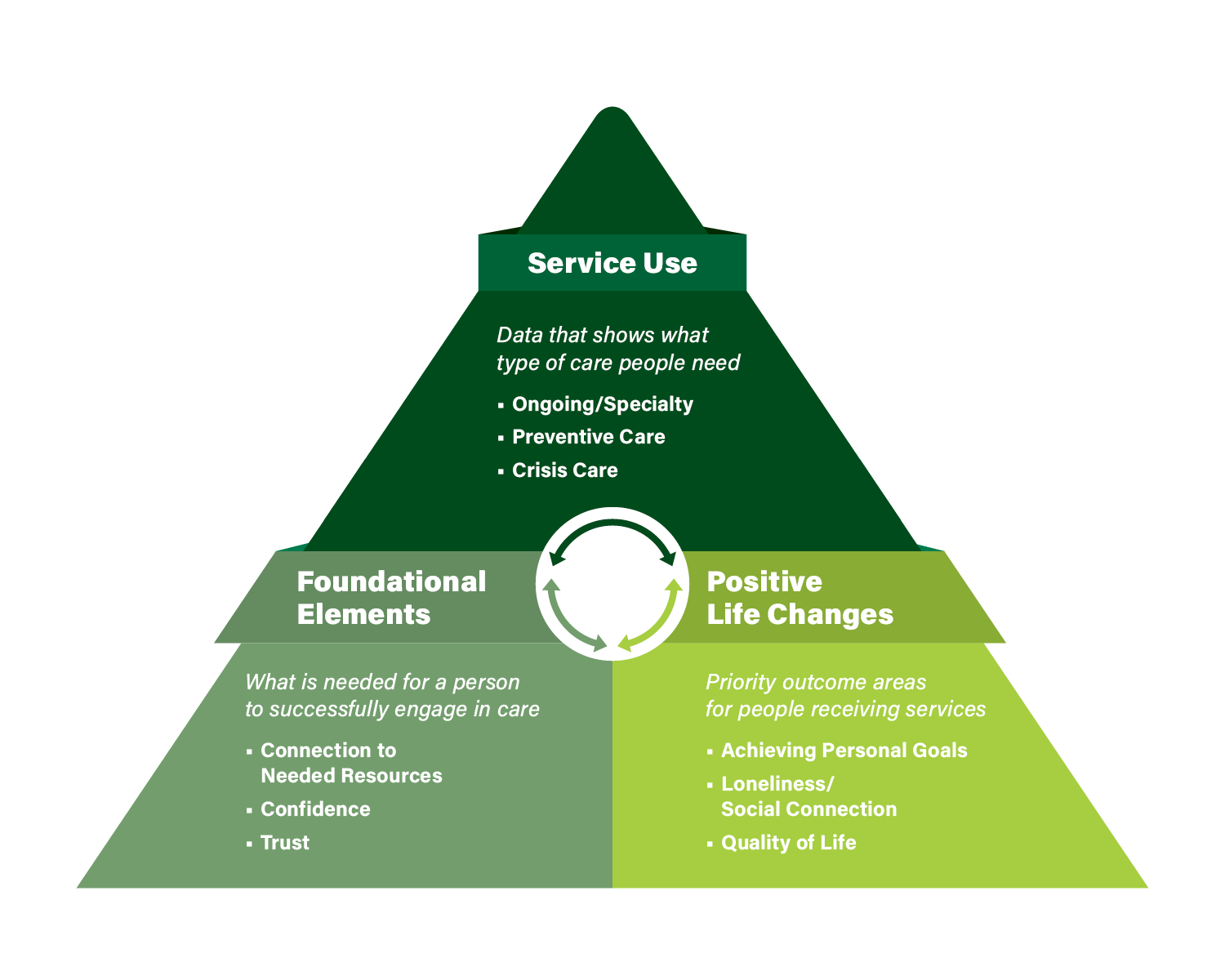
- A Measurement Framework for Serious Mental Illness, which presents the measurement domains and constructs that research suggests matter most for individuals with SMI, as well as exemplar measurement tools. This framework was informed directly by individuals with lived experience of SMI.
- An Implementation Roadmap, which provides practical guidance to support the adoption of this framework in real-world care settings, with attention to reducing provider burden, increasing stakeholder buy-in, and aligning system incentives.
You can download the Fountain House reports below: