
Tawuniya is helping redefine the role of the insurer in healthcare transformation across the Kingdom of Saudi Arabia.
Aligned with the ambitions of Saudi Vision 2030 and the growing global shift toward value-based healthcare, Tawuniya is building an integrated primary healthcare network through its subsidiary, Meena Clinics. This approach is not designed simply as a cost-control mechanism, but as a long-term clinical strategy focused on improving outcomes, strengthening care coordination, and supporting healthier populations.
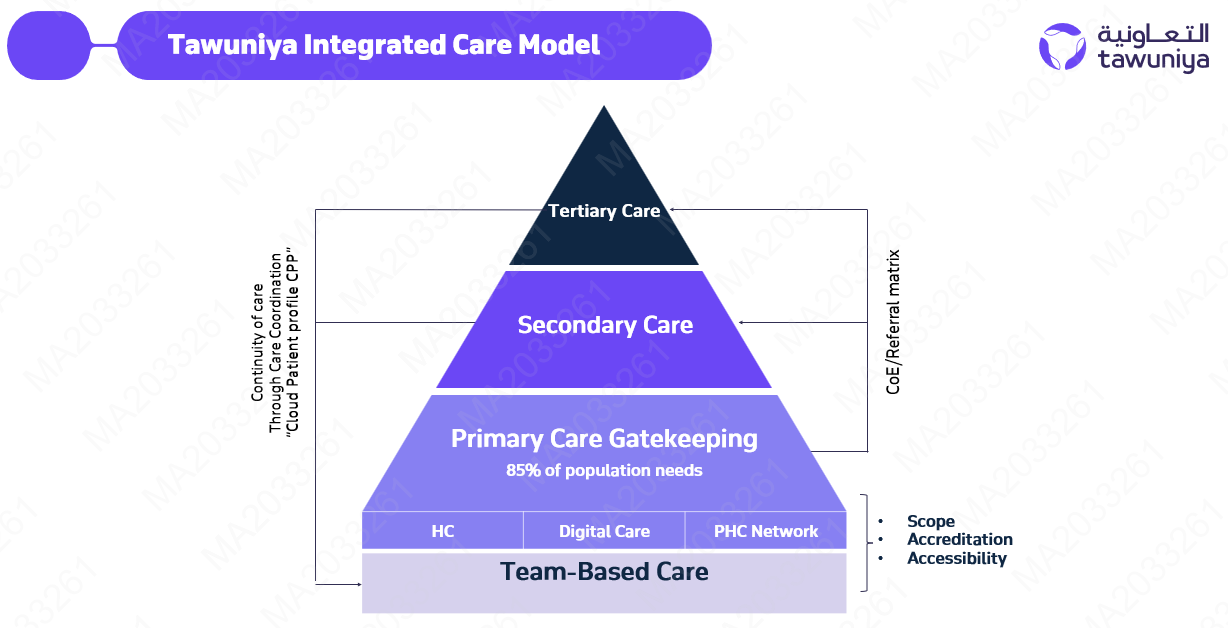
At the center of Tawuniya’s Integrated Care Model is team-based primary care gatekeeping. The model is designed to address approximately 85% of population healthcare needs through a connected network spanning home care, digital care, and primary healthcare centers. From there, patients move seamlessly through secondary and tertiary care pathways, supported by a Cloud Patient Profile that enables continuity of care across every touchpoint.
This model reflects a practical approach to population health management, positioning primary care as the foundation for:
Early risk identification and intervention
Integrated chronic disease pathways
Digitally enabled, data-driven care coordination
Sustainable, outcomes-focused healthcare delivery
By investing in integrated care infrastructure and coordinated delivery models, Tawuniya is contributing to a broader evolution in how payers support healthcare systems. Increasingly, insurers are moving beyond traditional financing functions to become active partners in prevention, care delivery, and long-term health outcomes improvement.
The approach also highlights the growing importance of primary care within value-based healthcare transformation. Rather than being viewed solely as a cost center, primary care is being positioned as the engine for prevention, early intervention, and sustainable population health management.
As healthcare systems globally continue to explore new approaches to value-based care, Tawuniya’s work in Saudi Arabia offers an example of how integrated, digitally enabled primary care models can support both system sustainability and improved patient outcomes.